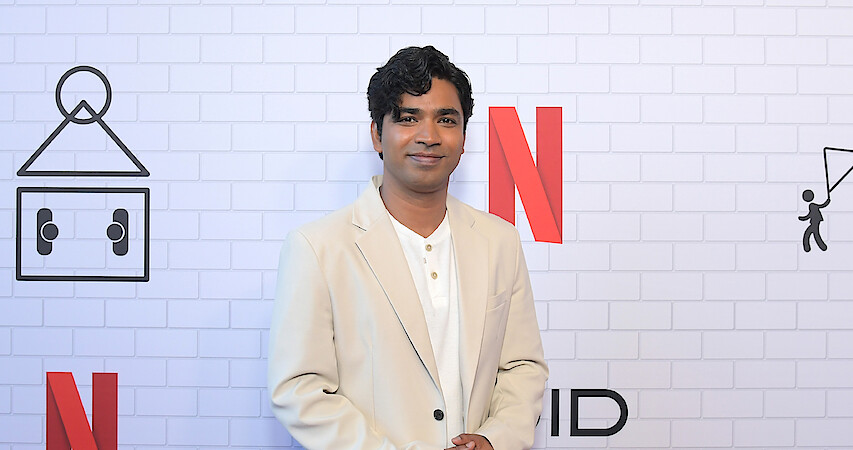
It’s a bustling morning at Raleigh Studios. Anupam Tripathi and his castmates are switching between interviews and photoshoots, going from room to room. In the midst of a packed schedule, the Squid Game actor found time to sneak away for a quick phone call with his mother. “I get these blessings to keep it grounded, to not fly too high,” he tells Tudum. It hasn’t even been a full year since Squid Game premiered, and the Indian actor still can’t believe how much viewers have connected with his character Ali Abdul. “I never imagined people would talk about my character,” he says. “There were so many great actors — everybody’s a huge star in South Korea. They have their craft, and I was learning from them.”
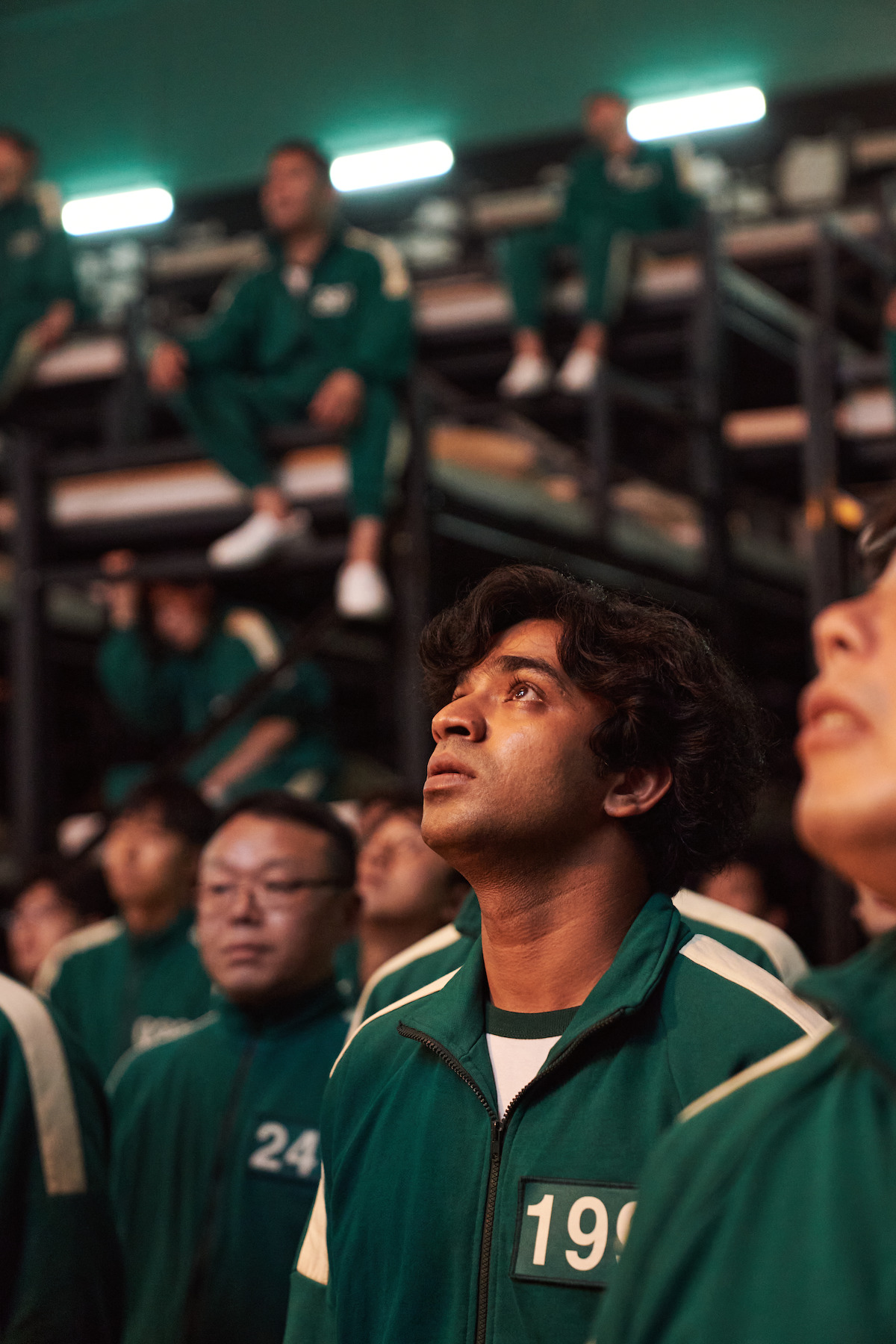
In the series, Ali is a Pakistani migrant worker whose employer hasn’t paid him in six months. Struggling to support his wife and their young son, he makes the ultimate sacrifice by joining the games in hopes of winning the life-changing cash prize. Tripathi understands that sacrifice all too well. “I, myself, was an immigrant in Korea looking for a better opportunity,” he shares. He believes Squid Game wouldn’t be complete without his character. Among all the brutality, Ali’s sincerity and honesty was a gift to the other players.
After receiving a scholarship to study acting at the prestigious Korea National University of Arts, the young actor left India over a decade ago to chase his dream. “In the beginning, when I started theater in India, it was not that easy because I’m from a middle-class family,” Tripathi reveals. “Anybody wants their kids to study and get a better job, but I was the wildest one in the home. If somebody said no, I was always finding my yes.”
It’s that persistence that Tripathi channels into Player 199. “If you keep doubting, ultimately you will never reach anywhere,” he says. The way to do that, as he’s found in both himself and Ali, is building trust. “Nothing can break you if you have that trust with you and your character.” Competing in a game where only one can win, Ali, nevertheless, makes it known from the very beginning that he’s there to make friends. During Red Light, Green Light when Gi-hun (Lee Jung-jae) trips, Ali saves his life by grabbing his shirt from behind. He goes out of his way to save his friends with his kindness, but some might say it’s that naivety that ends up getting him killed.
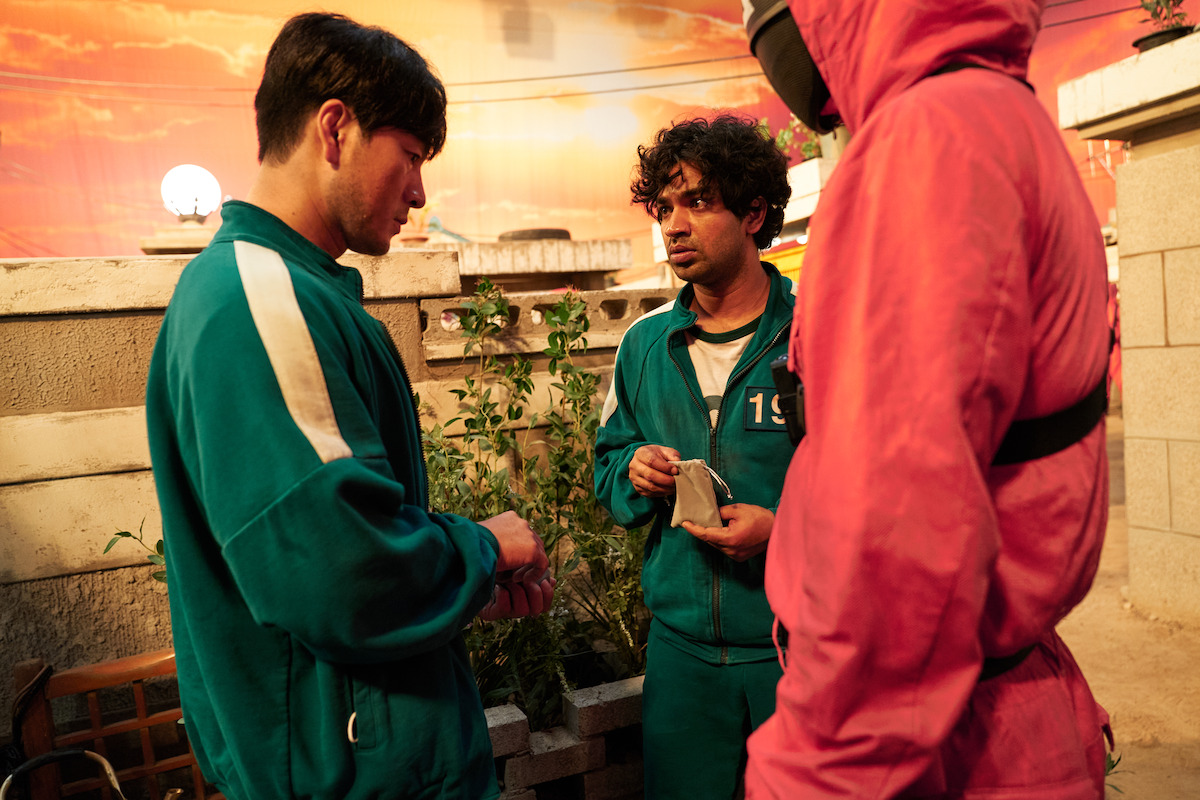
In the marbles game, his partner Sang-woo (Park Hae-soo) secretly switches out his bag of marbles for a bag of pebbles. This betrayal cuts deep, but it’s also not the first time Ali is stabbed in the back. As a migrant worker, he’s been exploited by his employer and a labor system of haves and have-nots. Still, Tripathi doesn’t blame Sang-woo. “What I learned after the betrayal is that you can understand people more,” he says. “You cannot just point your finger like, ‘He did this thing to you,’ but why [did] he [do] it? That question I can ask myself, not him.” After all, everyone’s just trying to survive — both inside and outside of the games.
Tripathi describes himself as a slow walker who never walks back. He’s had to leave home and learn a new language in order to succeed, much like Ali, and has pushed through no matter how many hurdles there have been “I am trying, [Ali] was also trying,” he reflects. “He’s gentle and honest. He cares for his family.” Although Tripathi’s father is no longer here, the actor has no doubt in his mind what he’d be doing right now. “If he was here, he’d be celebrating with neighbors and telling them, ‘My son is in Squid Game.’” Ali sacrificed himself to give his family the world; Tripathi has his world because of his family. “Whatever good things I have is because of my parents.”