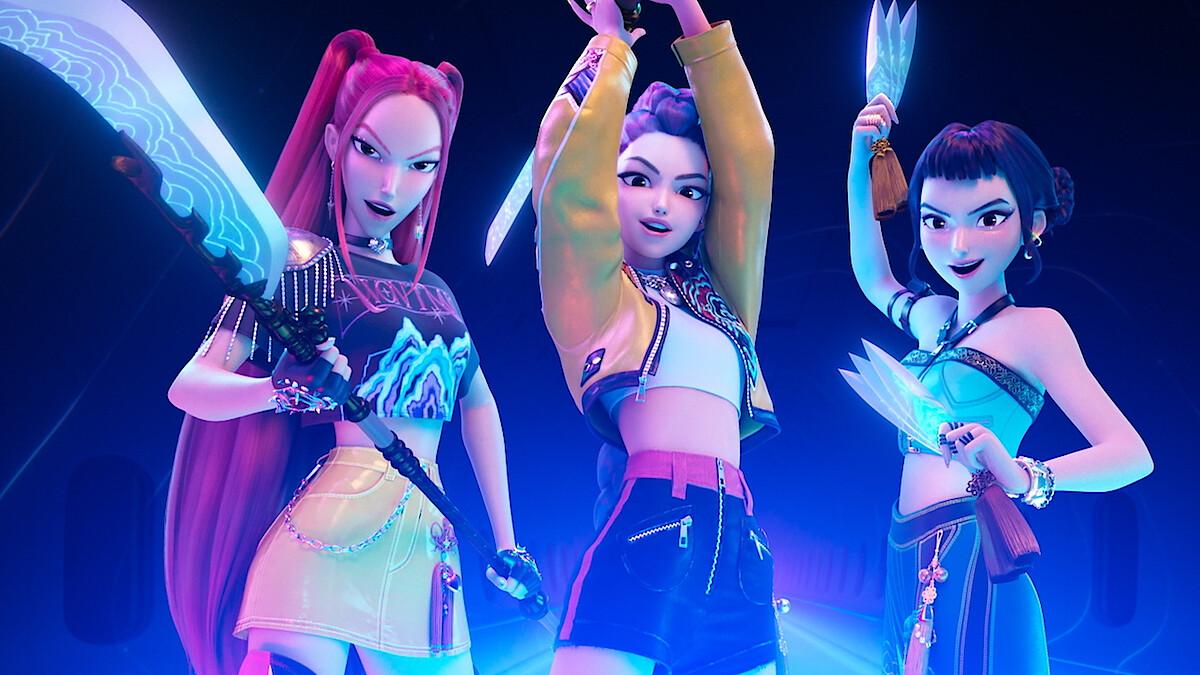
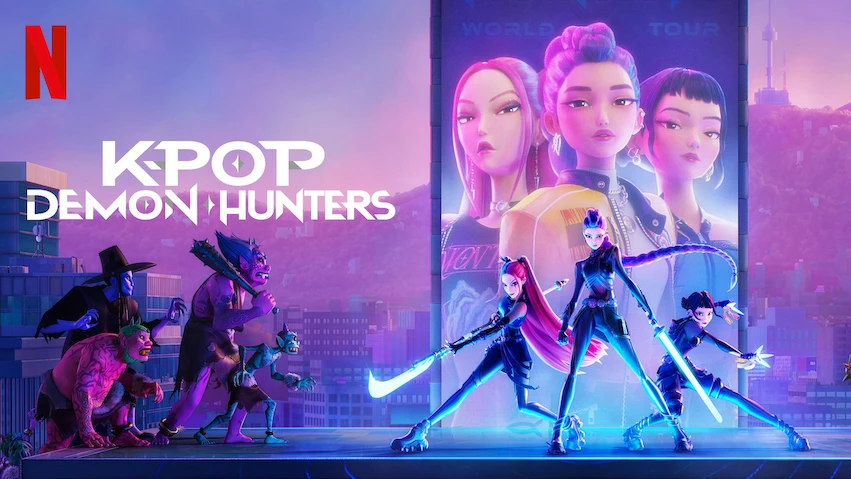
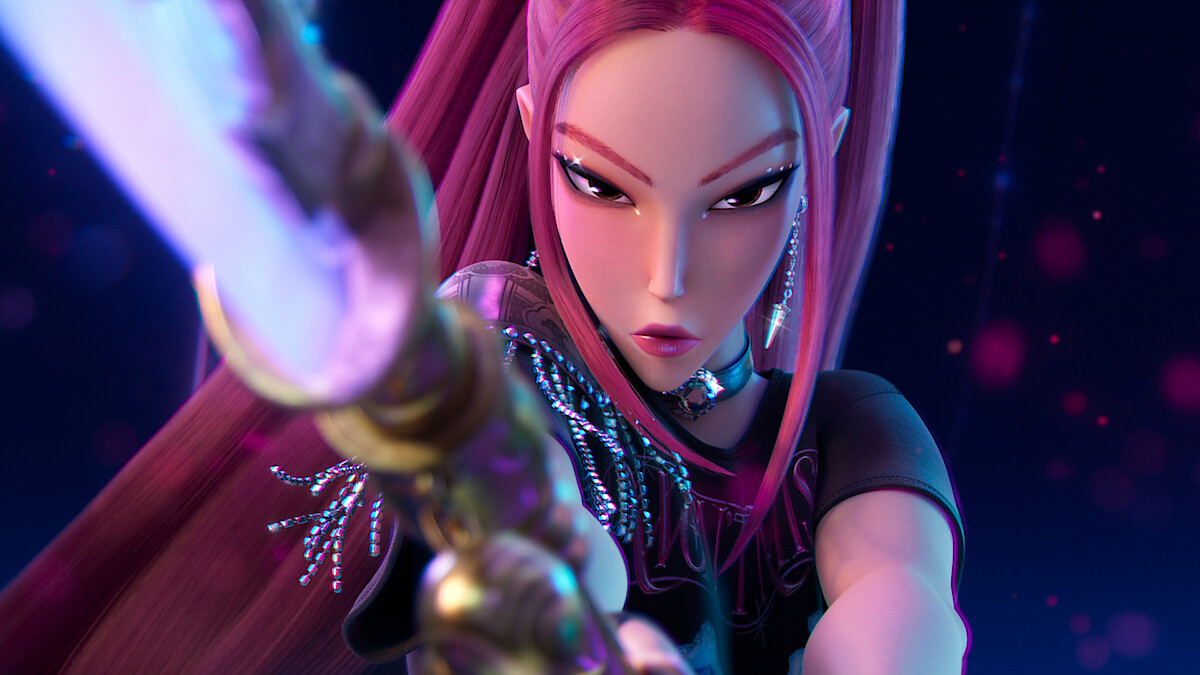
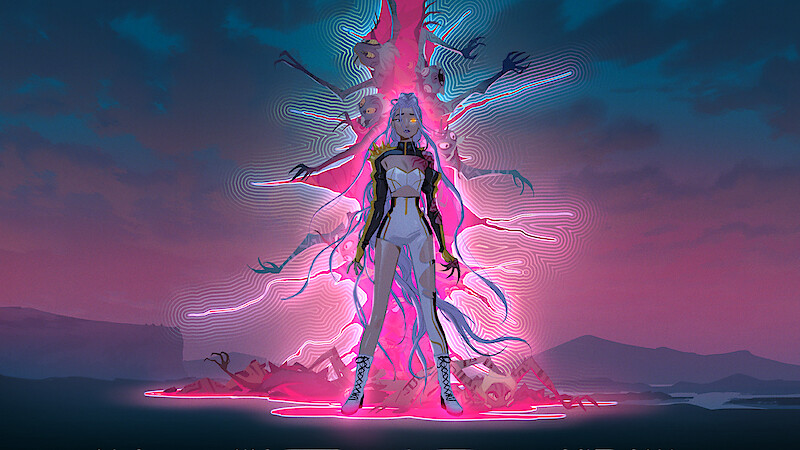
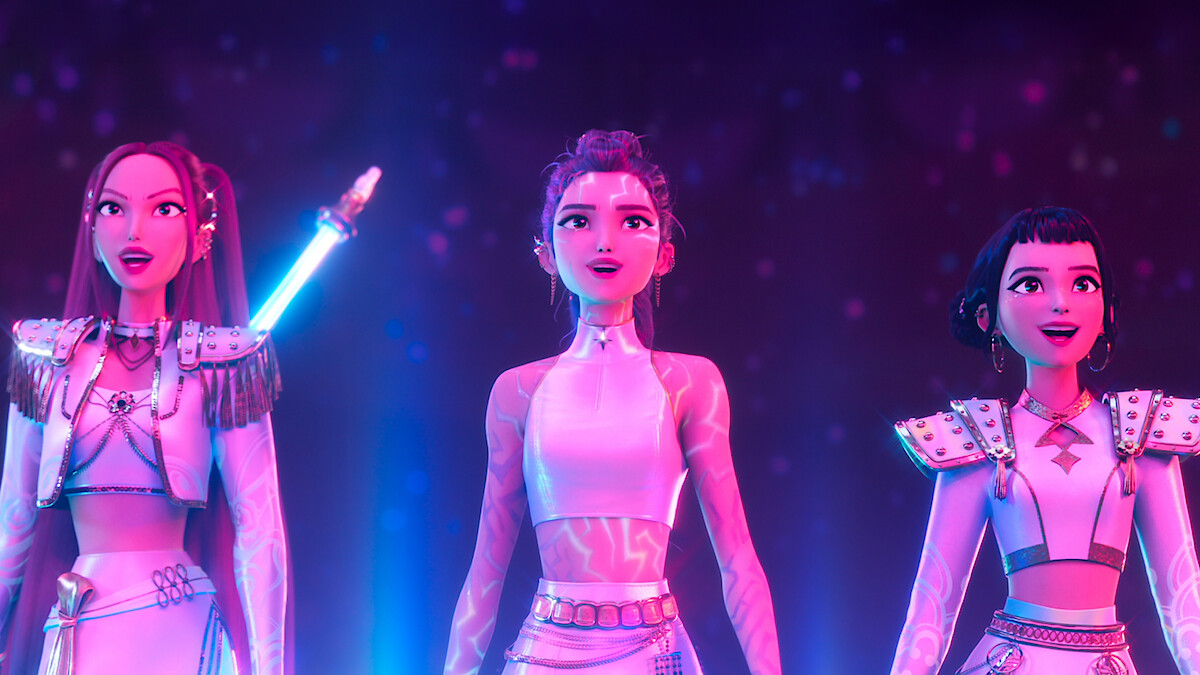
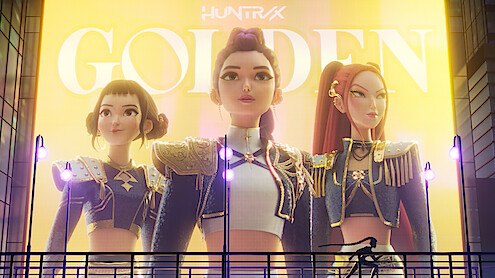
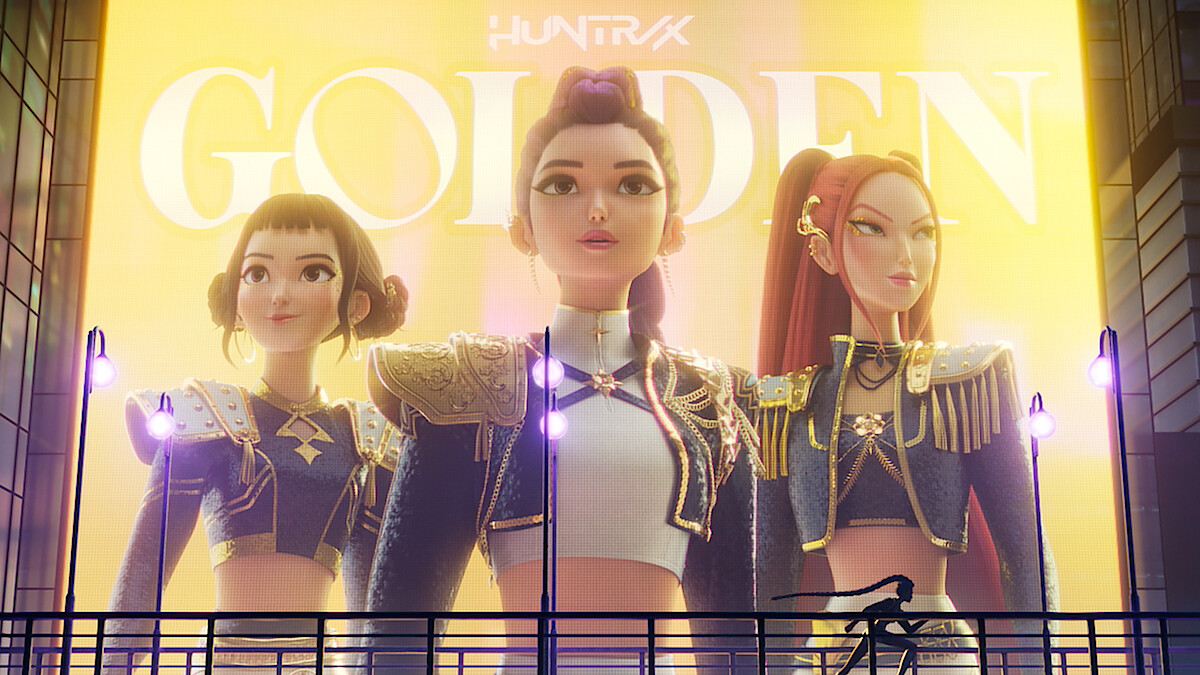
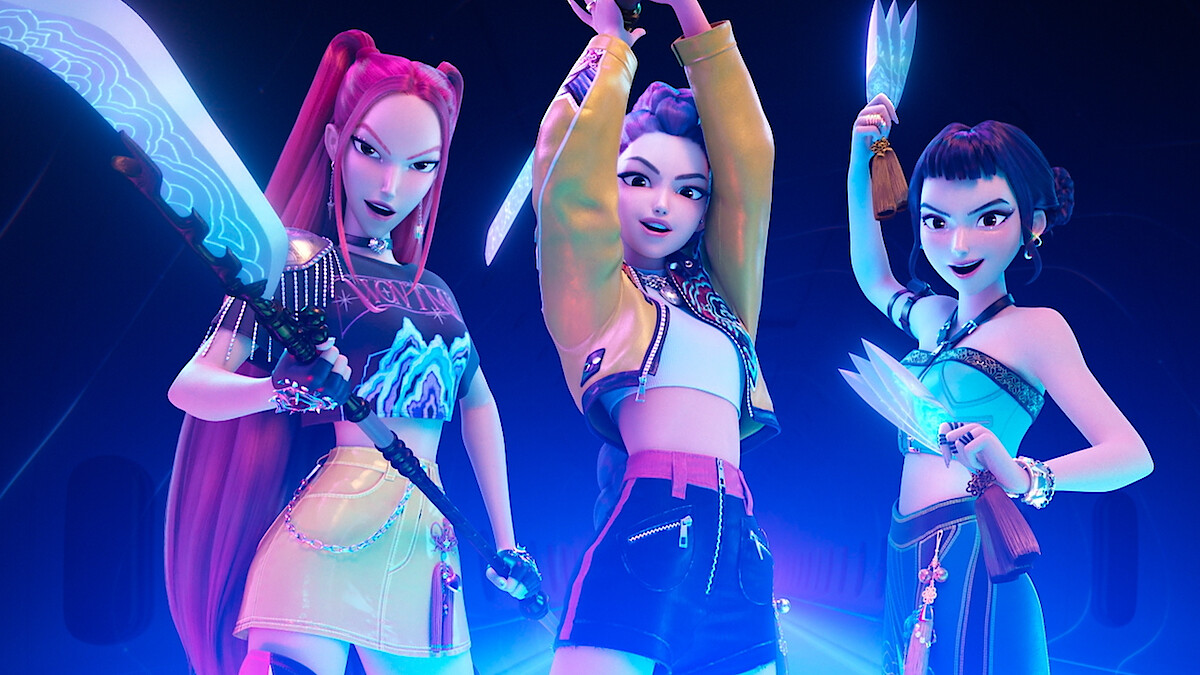
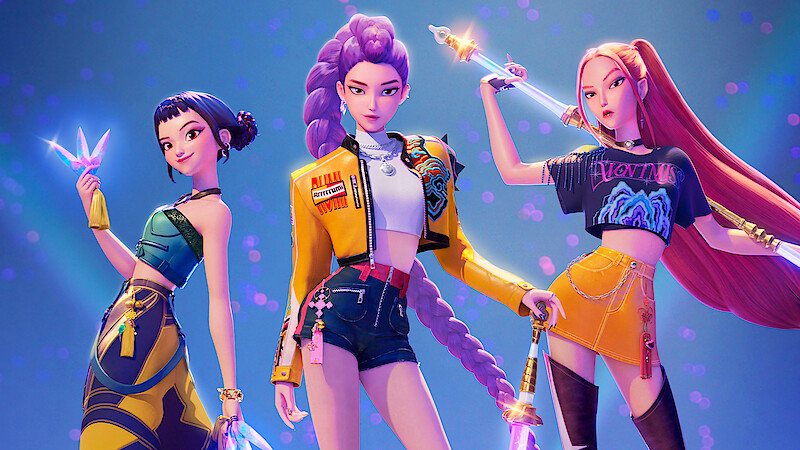
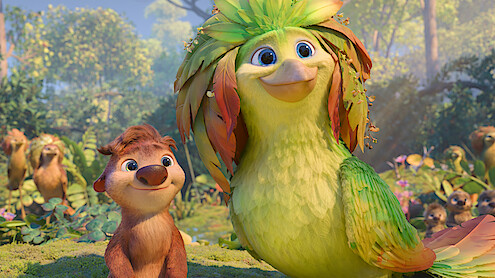
When K-pop trio HUNTR/X are slaying their performances onstage — as well as, you know, actual demons offstage — the music of KPop Demon Hunters has to hit like a world tour opener and carry the emotional weight of a narrative, epic coming-of-age movie-musical. Sounds like a job for musicians with almost superhuman powers, right? Enter THEBLACKLABEL, whose songwriters and producers are some of the biggest hitmakers in K-pop, including many of BLACKPINK’s most iconic tracks.
For THEBLACKLABEL A&R and lyricist Danny Chung, who helped steer the project from the very first demo, the thrill was in its unprecedented ambition. “K-pop hasn’t been applied to this [movie-musical] type of thing in this type of way, at this type of level,” he tells Tudum. “It was uncharted territory, unblazed trails.”
That challenge meant years of cross-continental collaboration on KPop Demon Hunters. The film team, led by directors Maggie Kang and Chris Appelhans, never compromised on the storytelling aspect of the music; at the same time, THEBLACKLABEL’s songwriters and producers never compromised on making bulletproof, chart-ready K-pop. Instead of meeting in the middle, they built something new: a soundtrack that feels as cinematic as it does playlist-dominating. And clearly, the alchemy worked. The soundtrack has garnered five Grammy nominations, and the music has been recognized with a Golden Globe nomination.
From the power-ballad-meets-banger glow of “Golden” (lyrics by EJAE and Mark Sonnenblick), the winking fizziness of “Soda Pop,” to the sinister swagger of “Your Idol,” each track had to introduce characters, advance the plot, and still go as hard as a standalone global No. 1. In this conversation with Tudum, Chung breaks down how a decades-long friendship brought THEBLACKLABEL into the project, how “Golden” evolved into the film’s emotional core (“It feels like stardust”), why “Soda Pop” was designed to be “annoyingly addictive,” and what it was like voicing Baby Saja himself.
How did THEBLACKLABEL first get involved with KPop Demon Hunters?
Danny Chung: Interestingly enough, it was a childhood friend — one of the associate producers, Agnes Lee. I’ve known her since I was a freshman in high school. Fast-forward many, many years — she was associate-producing this film. We were both living in Seoul at the time, and I’d been working at THEBLACKLABEL for a few years at that point as a songwriter, and [the film team] obviously needed a K-pop component. There was a big emphasis on making it authentic, and they wanted music that was authentically K-pop, and they needed people with that experience in a team that could bring that music to life. I think THEBLACKLABEL was at the top of her list because she had been a big fan of [THEBLACKLABEL co-founder and producer] Teddy Park and all of his music for a long time.
Once everybody heard the vision and understood the big picture, that’s what drew us in, because we thought everybody could blaze a trail and draw the blueprint together, collaboratively.
How did you figure out the soundscape of the KPop Demon Hunters universe?
Chung: We had weekly meetings with the directors, Maggie Kang and Chris Appelhans, and executive producer Michelle Wong and everybody, crossing all parts of the globe, from all corners of the world, from Korea, to New York, to LA. Myself, I was in Bangkok. We were getting all these Zoom calls, face-to-face, every single week, trying to align and really get this creative direction and this musical direction down.
And it did take some time to get there, but I think THEBLACKLABEL was relatively high on [the filmmakers’] wish list because we were experienced working with female artists. We did a lot of the BLACKPINK stuff, so I think that was a big inspiration for who the HUNTR/X girls were going to be, in terms of being powerful and empowering women who had a message.
We started with “How It’s Done,” which I think does have that BLACKPINK DNA in it. It was the prototype of how this musical relationship [with the filmmakers] would evolve. It did take some back and forth, chiseling and figuring out our groove and flow. The film team was not going to waver on the creativity of the film — that the music needed to be narrative-driven storytelling first and foremost. And the music team wasn’t going to waver, or bend, or fold on it needing it to be K-pop and good music first and foremost. Neither side was willing to budge, but neither side had to, so I think it ended up being both.
THEBLACKLABEL isn’t just about the hits, but about creating the K-pop image and vibe as well. Did THEBLACKLABEL contribute beyond the music?
Chung: Yeah, absolutely. Leejung, one of the choreographers at THEBLACKLABEL, contributed to the choreography, so it was a very holistic process. We were all-hands-on-deck during the whole creative process. The wheels really started to turn, and the gears started to shift when a lot of THEBLACKLABEL team met up with the Netflix team in LA, and they presented us with more of the visuals. We could experience and see how all of this would hang together in real life rather than just through Zoom and just hearing it verbally.
They presented us with the 360-degree pitch of how this universe would play out. Nothing was guaranteed, but we all kind of trusted the vision and trusted the people involved. Coming from K-pop, K-pop really likes to make sure that things are controlled, in a sense, and make sure that things will come off in the way that it is envisioned. So a collaboration like this is kind of rare, if you think about it, because you have to really trust the people you're working with. And I think it took trust on both sides and faith in both sides to get us there, and that's what it took, and that’s what we gave, and these are the results.
What shifted once it became clear the songs had to be narrative driven, not just bangers?
Chung: Admittedly, I think all of us on the music side originally went into it thinking it was going to be another day at the studio. We were used to it, being in the studio every day, writing songs every day, producing every day. So we’re like, “OK, let’s just make a song, see where it sticks.” At first, they didn’t give us too much direction. For “How It’s Done,” we needed something badass, and something that really tells who these girls are, and gives the vibe, and really lands with the audience.
We were like, “OK, we can do that. We’ve done that.” I think maybe they gave us less [direction] on purpose, so we could create a general vibe and soundscape. And then, after we got through that, [music supervisor] Ian Eisendrath and the directors were gentle with their direction and molding and sculpting of the music … until it got to a point where they couldn’t be gentle anymore.
Because it really got to a point where it was like, “OK, you guys really need to understand this has to be narrative driven. It has to be story forward.” And I think, especially that song, because it was so imperative that that song had to land immediately, within the first three minutes of the film, and really show who these girls are and get people’s attention, as well as make people excited for the next hour and a half of this film.
It seems like THEBLACKLABEL team, along with EJAE and Mark Sonnenblick, really nailed that balance with “Golden.”
Chung: That song was the last one to be really locked in. “Golden” went through a few iterations of production, meaning the instrumental changed a few times before it landed where it would be. And we would go back and forth between THEBLACKLABEL and the music team and the film team, and 24 would be there taking direction. And it was funny, because 24 doesn’t speak English that well, so we would have the music side, mainly Ian, Maggie, and Chris, and Michelle giving direction of where this music is supposed to go.
Because we would start with the beat. We wouldn’t start with lyrics yet. And I think it was originally going to be called “Gold.” That was the direction of the music and everything. And then I think it took a couple of times for 24 and IDO to get there, and Teddy to get there as well, to figure out what this soundscape really meant. Because it is kind of like the cinematic climax of the film, even though it does come earlier. It comes later too, in full form, so it had to be this moment.
With the idea of “Gold” as the direction, there's this twinkly feel in the beginning. It feels like stardust. Ian had a very keen and direct understanding of what he wanted this moment to sound like, feel like, and look like, and we had to make sure that nothing was being lost in translation, literally. Shout-out to Megan on THEBLACKLABEL team, and Sunil, and Soulscape. There were a lot of people involved. It took a village to get there, but yeah, it eventually got there.
Why do you think “Golden” hits people so emotionally?
Chung: We knew this moment had [Rumi, Mira, and Zoey] really finding themselves, and I think that’s why it also resonated with so many people, because it is so much about self-realization, or finding yourself, or being okay and not knowing yourself yet and finding hope in that.
And I think that was the more emotional part of the direction that was given as well, that this had to convey that kind of feeling. So that does come across in a power ballad. There is this vulnerable feeling in the verse of the song that feels like the tension is there, and the tension is building, and then you feel the release in the chorus, and I think that’s all intentional. And that just comes from great songwriting as well. Shout-out to EJAE and Mark, and everybody involved. It was just magic.
Let’s talk about “Soda Pop.” What was the vision for that song?
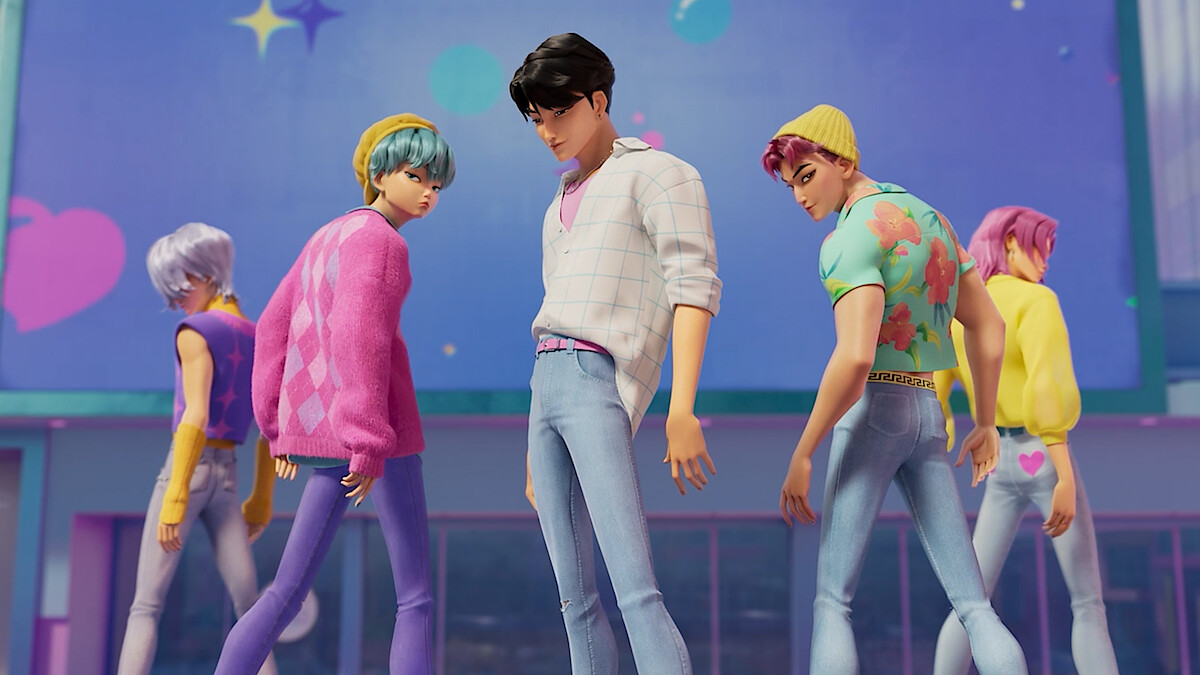
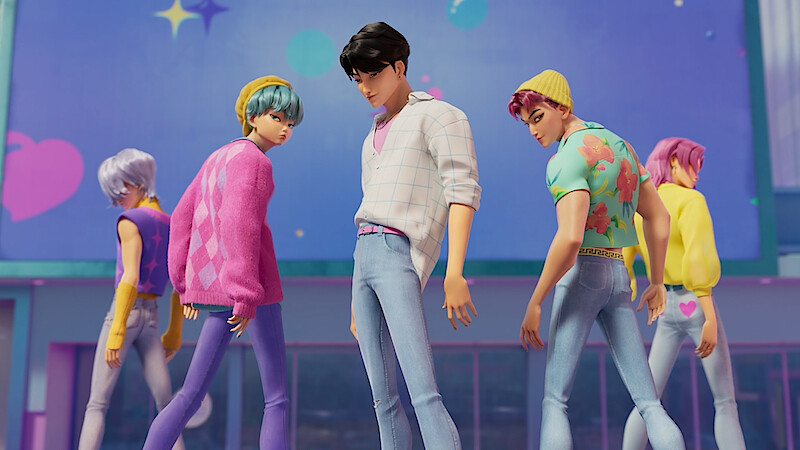
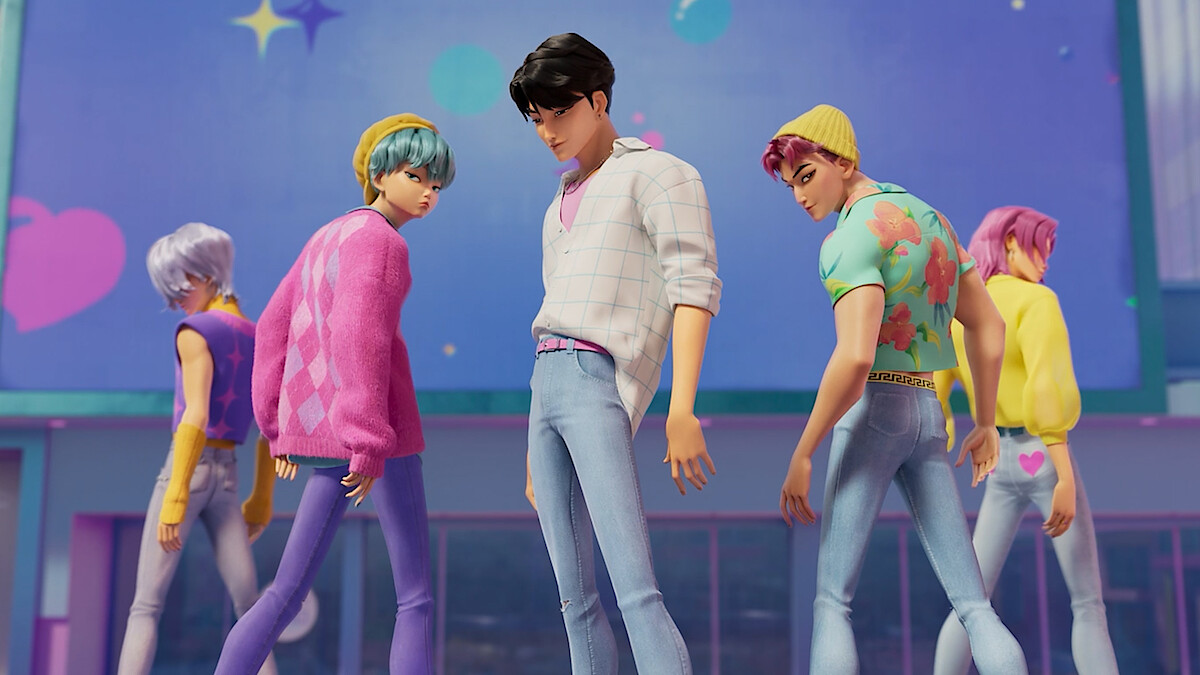
Chung: I mean, that was such a labor of love. It was a challenge because, again, THEBLACKLABEL, historically, has worked mostly with girl groups, and we haven’t done a boy group project in a long time, and we definitely haven’t done anything animated or fictional.
Holistically, the DNA of a song like “Soda Pop” is different from THEBLACKLABEL DNA, so we had to almost think method, think outside of our own body. At first, the direction was coming back to our early demos of the song, and it was almost that it was “too cool,” because that’s what we were used to doing — a little bit more fashion-forward music. But “Soda Pop” by design was supposed to be a little retro and ... I want to use this word carefully, but cheesy by design — an earworm and “annoyingly addictive.” That was the direction we were given.
That’s not easy to do. It’s also a very specific thing. If making addictive music were easy, then everybody would be doing it. With the help of 24, and Dominsuk, and Kush, and Vince, and I did my part on that song as well in terms of songwriting, I think we got it down.
Because it’s not supposed to be this very cool thing. It’s kind of ’90s, a very classic boy-band type of song, where the choreography adds a lot of the character to it. Where the concept itself is an allegory and a metaphor, and the meaning is kind of polar opposite of the sound. So that was actually really fun because it was kind of a challenge to do, and then it’s just a lot of symbolism involved, and it works on many different levels, and kind of attacking it from very different ends of the spectrum.
And then there’s “Your Idol,” which is so dark and specific to the Saja Boys. What were you going for there?
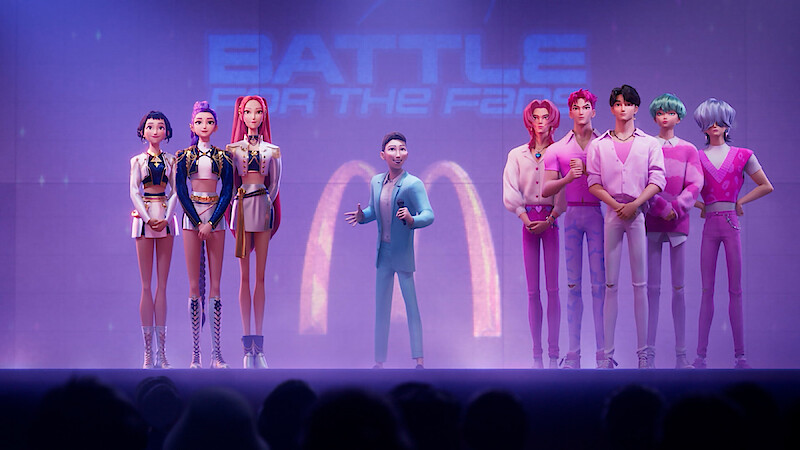
Chung: The Saja Boys only get those two moments in music, the “Soda Pop” moment and the “Your Idol” moment. It was, by design, supposed to show duality, and I think that is a common thread of this movie: duality, and having two sides that don’t feel like they belong together, but they’re all intertwined within one being or one entity. “Soda Pop” was sinister in secret, and “Your Idol” was sinister in your face. And I think that that soundscape of “Your Idol” really gets that message across.
You’re also the voice of Baby Saja. How did that come about?
Chung: I mean, that was amazing. The directors and producers heard my voice in the demos and stuff, and they kind of got used to the idea of me being the voice. The concept for Baby Saja was always to have this kind of cutesy character who was the maknae of the group, the youngest one with this cute aesthetic and character and concept, but having the deep rapper voice, which is kind of a trope in K-pop itself. I guess it got the job done. I hope so.
Like you said, there was no guarantee the film would become the phenomenon that it has. What has it been like watching the reaction?
Chung: We obviously hoped it would be successful, but we didn’t even know what “successful” necessarily meant. We were happy just to get something like this released — something so Korean, and so K-pop. That was a success on its own. If it was going to be a commercial success, that would be another conversation. I don’t think anyone could have dreamed of where it has gone, and we’re obviously very grateful for that. We’re still a bit in shock. It’s hard to internalize and hard to live in the moment because the moment changes day to day.
There have been several screenings of the film in theaters. The songs feel massive in that space. Did you have that cinematic scale in mind from the start?
Chung: We did understand how big and cinematic the music had to be in general, and I think that was familiar for us as well, because the music that we make in K-pop is cinematic by definition. A defining characteristic of K-pop is that it creates universes. And I think that is what is special about K-pop and kind of what sets it apart from a lot of pop music in a unique way.
I think everybody who does music right creates their own universe, whether intentionally or not. However, I think K-pop does it with some intention, to create a universe for these groups and these artists that they live in. And we don't want to make it too far from who they are naturally, either. I think we build a concept around who these characters are, and how the chemistry works, and try to make it more than the sum of its parts. And we can’t necessarily dictate that, either. I think it’s a lot about what the fans decide to do with that universe that is kind of laid in front of them as well.
And I think that’s exactly what happened with this movie as well. We couldn’t do this with the people involved, and the staff, and crew, and artists that have been in this movie itself. It took the fans to really get it there, and really understand it, and they’ve made their own fan theories, and they’ve turned this thing bigger than life.
Stream KPop Demon Hunters, only on Netflix.